
Container houses have moved from construction-site curiosity to a mainstream building solution. Mining companies house their crews in them. Resort owners turn them into luxury glamping suites. Families use them as backyard homes, offices and rental units. And in almost every conversation, the first question is the same: how much does a container house cost?
The honest answer is that there is no single price. A container house is a custom product — the final cost depends on size, configuration, materials, and how far it has to travel. What you can do is understand every cost driver, so you can budget accurately and compare quotes fairly. That is exactly what this guide covers.
What affects the price of a container house?
1. Size and type of unit
The biggest cost driver is the footprint:
- Standard 20-foot container house — a compact single room around 15 m² of usable space. The most economical option, ideal for one worker, a small office or a utility room.
- 40-foot container house — roughly double the floor area, suitable for a family room, a larger office or a two-room layout.
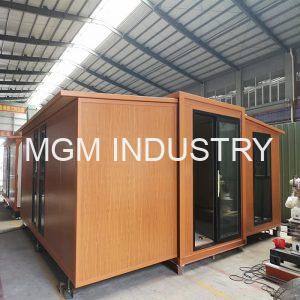
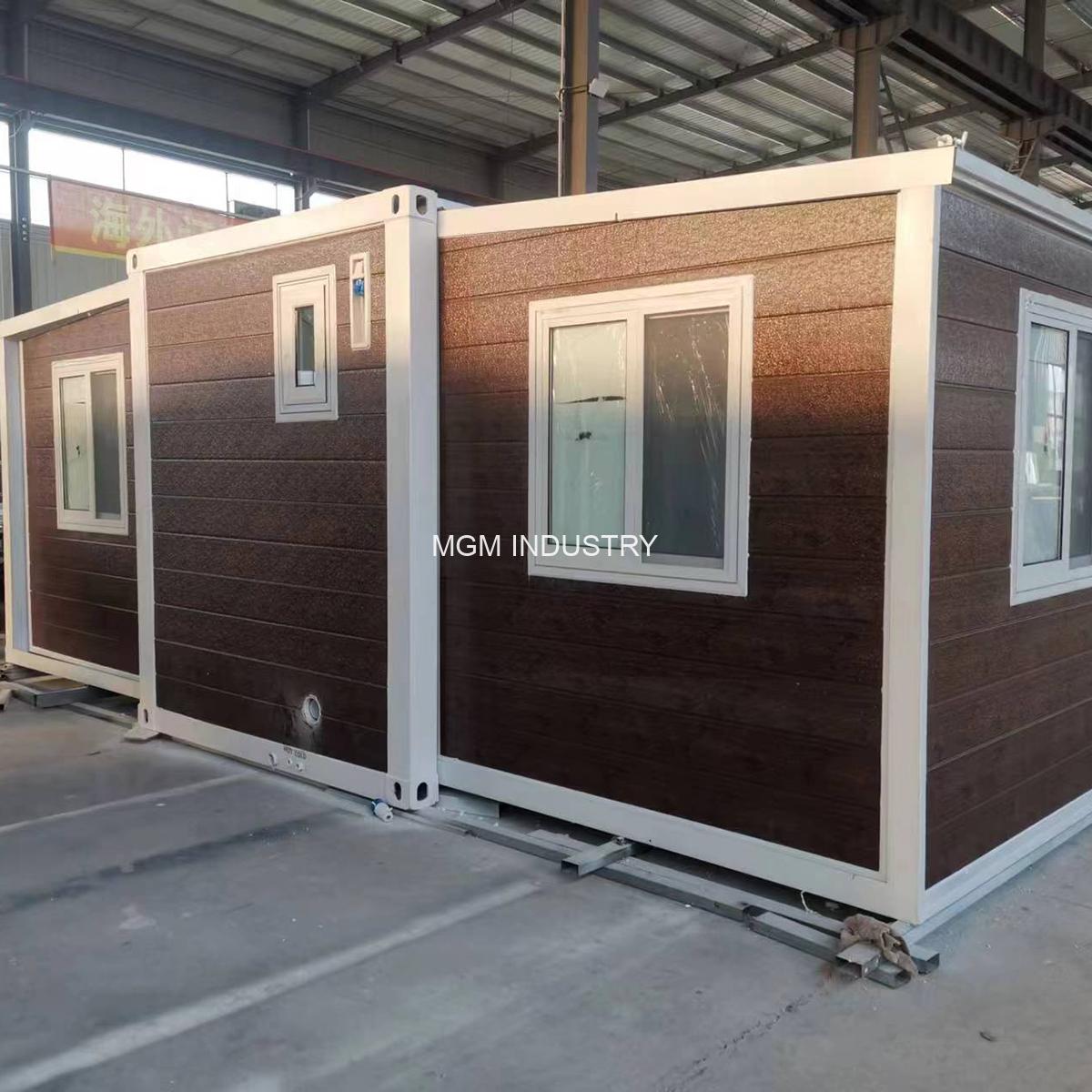
- Expanded / foldable units — these open out on site to two to three times their transport footprint. Much higher usable space per container, but a more complex structure and higher unit cost.
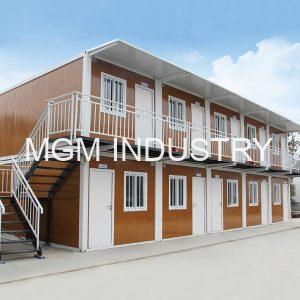
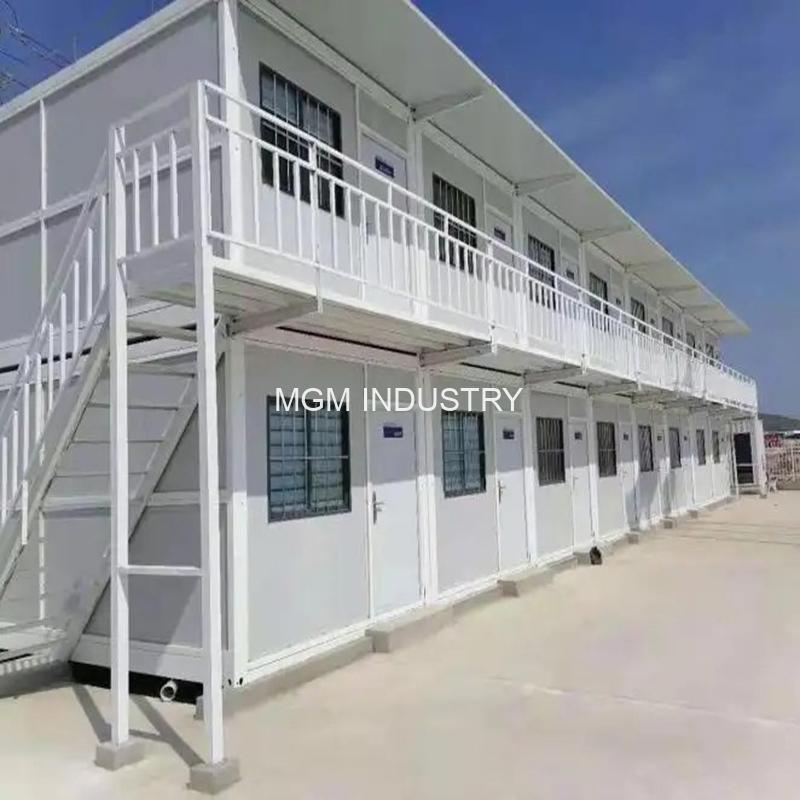
- Multi-unit combinations — two or more containers stacked or joined into a house, dormitory block or camp. Total cost scales with the number of units plus connection and roofing work.
2. Configuration: shell, standard or fully furnished
- Shell / basic unit — structure, roof, walls, basic doors and windows. The lowest cost, but you finish the interior yourself.
- Standard fitted unit — insulated walls, internal partitions, electrical wiring, lighting, plumbing, bathroom, flooring and basic furniture. The most common choice for worker housing and field offices.
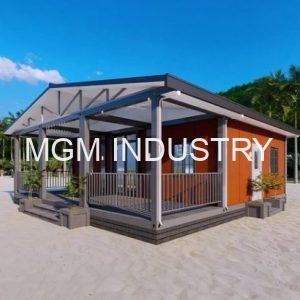
- Premium turnkey unit — smart-home features, full kitchen, air conditioning, high-end finishes and panoramic windows. Typical for glamping capsules, luxury cabins and guest villas.
3. Materials and insulation
Steel quality (hot-dip galvanized frame), insulation type and thickness (polyurethane foam, rock wool, glass wool), glass specification (single vs double-glazed LOW-E) and cladding (aluminum panels, sandwich panels) all move the price. For extreme climates — Gulf summer heat, Canadian winters, cyclone zones — upgraded insulation and glazing are worth every cent and should not be the first thing you cut.
4. Customization
Layout changes, extra doors and windows, smart access control, solar-ready roofing, wheelchair accessibility, kitchen equipment — every customization adds design and production cost, but also increases the value of the finished unit for its purpose.
5. Shipping, customs and installation
For international buyers this is often 20–35% of the total budget:
- Sea freight from the production port to your destination port.
- Customs duties and taxes — vary significantly by country and product classification.
- Land transport from the port to your site.
- Crane and installation — a container house needs a crane for offloading and positioning, plus connection of utilities.
- Foundation — from simple concrete pads to full foundations depending on local soil and building codes.
The good news: because the house is more than 90% complete in the factory, on-site work is a matter of days, not months. That is where the real cost advantage over conventional construction appears.
Indicative price ranges (market ballpark, 2026)
As a general indication, based on commonly reported market figures, container housing typically falls into these broad bands. Exact pricing depends entirely on your specifications:
| Type | Typical price range (USD) | Note |
|---|---|---|
| Basic 20-ft container conversion | $8,000 – $15,000 | Local conversion, shell-level finish |
| Standard fitted 20-ft unit | $15,000 – $25,000 | Insulated, fitted, ready to use |
| Expanded / foldable unit | $25,000 – $45,000 | 2–3× usable area after expansion |
| Premium turnkey / glamping capsule | $40,000 – $80,000+ | Smart home, full fit-out, panoramic glass |
Treat these as planning ranges, not quotes. A professional manufacturer will give you an itemized quotation covering structure, insulation, interior fit-out, electrical, plumbing and delivery — which is the only reliable way to compare.
Container house vs traditional building: the cost argument
Per square meter, a factory-built container house is often cheaper than conventional construction — and the gap widens when you count time:
- Speed: a fitted unit can be produced in weeks and installed in days, versus months on a traditional build site.
- Labor: factory production means less skilled labor on site, in safer conditions.
- Quality control: fabrication under controlled conditions produces consistent welding, insulation and waterproofing.
- Relocatability: a container house can be moved and reused when a project or site changes — traditional buildings cannot.
- Waste: factory construction generates far less material waste than on-site building.
How to get an accurate quote
To get a meaningful price from any supplier (including MGM), prepare these details:
- Purpose and occupancy — how many people, what activity?
- Size and number of units — a single unit, or a camp/dormitory block?
- Configuration — shell, standard, or premium turnkey?
- Climate and location — insulation and glazing requirements.
- Destination port — for freight and customs estimates.
- Timeline — when does the project start?
With these six points, a manufacturer can quote accurately and you can compare apples with apples.
FAQ
How long does a container house last?
With hot-dip galvanized steel frames and proper maintenance, 15–25 years or more, depending on climate and coating care.
Are container houses suitable for extreme climates?
Yes, with the right specification: polyurethane insulation, double-glazed LOW-E windows and appropriate HVAC keep them comfortable from Gulf summers to Nordic winters.
Can container houses be expanded on site?
Yes. Expanded and foldable units are designed to open out on site, giving two to three times the transport footprint — ideal for glamping capsules and compact family homes.
Do I need planning permission for a container house?
It depends on your local building codes and intended use (temporary vs permanent). Check with local authorities — many buyers use container units as temporary or relocatable structures to simplify approval.
Can I buy a single unit, or do you supply large camps?
Both. MGM supplies everything from single space capsules to complete worker camps and multi-building projects.
Get a precise quote for your project
If you are planning a container house project — a single unit, a glamping resort, a mining camp or a school — send MGM your requirements and receive an itemized quotation including structure, insulation, interior fit-out and delivery. MGM INDUSTRY LIMITED is a professional PEB and prefabricated building manufacturer with projects exported to 50+ countries.
- WhatsApp: +86 170 766 13145
- Email: [email protected]
Contact us or browse the container house products for ideas.